Standard Bots Expands Beyond RO1 Into a Four-Robot Platform
Spark, Core, Thor, and the coming Bolt now sit beside StandardOS and the Flux AI private beta, giving Standard Bots a broader range while making availability labels and complete-cell diligence more important.
By WhatAI Editorial Team ·
Standard Bots Has Outgrown the RO1 Story
Standard Bots first became easy to explain through one product: an American-assembled six-axis robot arm called RO1, sold with approachable software and a lower list price than many established industrial alternatives. That description is now too small. The company’s current catalogue spans Spark for workbenches and education, Core as the renamed centre of its production range, Thor for long-reach heavy work, and Bolt as a configurable bimanual system that is still marked coming soon. Around the hardware sits StandardOS, built-in fleet management, developer APIs, remote support, optional vision, and an ambitious private-beta AI platform called Flux.
The expanded range makes Standard Bots a more serious automation proposition, but it also creates a risk of mixing four different levels of maturity. Core has published specifications, a $37,000 starting list price, purchase and lease routes, support documentation, and established application material. Thor has a current $49,500 starting price and detailed production specifications. Spark is listed at $29,500 and has an education bundle, yet its product page still says shipping was expected to begin in the second quarter of 2026, so present availability deserves confirmation. Bolt can be configured and reserved, but the company still labels it coming soon. Flux AI is presented as a private beta, not a universal feature ready for every buyer.
That separation matters more than the marketing language. A manufacturer evaluating CNC tending next month should not build a business case around a future bimanual droid. A university ordering a tabletop research arm needs to confirm lead time, curriculum, software access, and support rather than relying on a launch target. A team exploring demonstration-trained manipulation should understand the data, integration, safety, and model-development work behind the private beta. Standard Bots is moving quickly. Good procurement keeps excitement and availability in different columns.
Three Arms, Three Different Production Envelopes
Spark is the compact arm. Standard Bots publishes a 7 kg payload, 900 mm reach, 21 kg robot weight, repeatability of plus or minus 0.025 mm, and a footprint under 200 mm in diameter. It is aimed at small-part assembly, inspection, research, laboratory handling, testing, education, and other workbench tasks. The arm is advertised with an IP69K design, while the control box is rated IP44, an important distinction for washdown or dusty environments. Force and torque sensing, manual guidance, configurable vision, no-code programming, and tool-flange power and I/O broaden the applications beyond simple position moves.
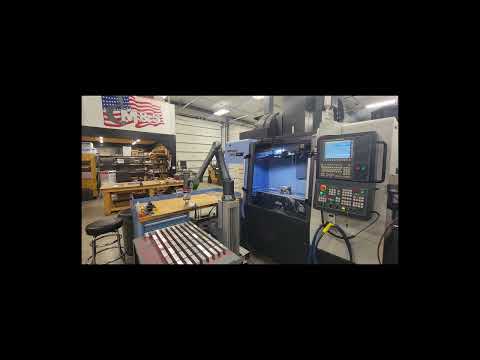
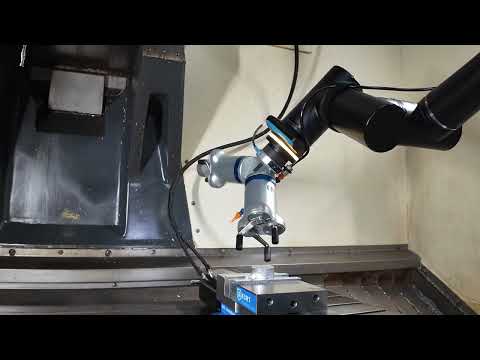
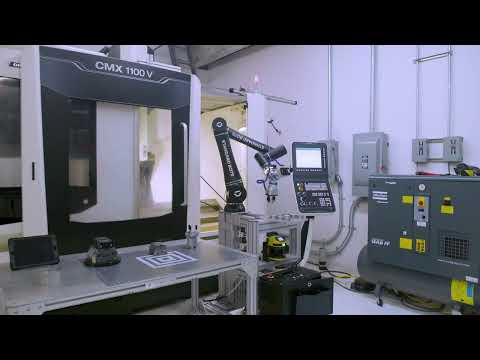
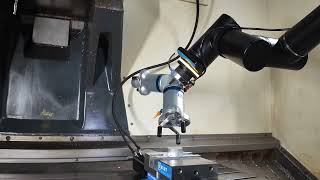
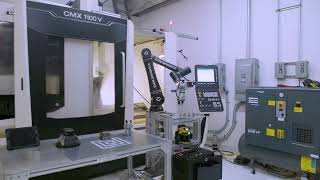
Core is the current name shown on the page that still uses the RO1 web address, and older manuals continue to say RO1. It carries 18 kg across a 1.3 m reach, with advertised linear speed up to 3 m/s and repeatability of plus or minus 0.025 mm. Standard Bots positions it for machine tending, pick and place, palletising, case packing, inspection, finishing, and multi-step production work. Optional pre-integrated wrist vision can locate parts, read machine screens, and support other vision workflows. The no-code interface, portable base option, direct equipment connections, remote diagnostics, and fleet management are designed to reduce the friction around a first or growing robot deployment.
Thor moves into a larger class: 30 kg payload, 2 m reach, 79 kg robot weight, a 296 mm footprint, up to 4 m/s linear speed, repeatability of plus or minus 0.025 mm, and an advertised IP69K arm design. It is built for larger parts, tools, machines, pallets, welding layouts, and material-handling envelopes. Ethernet at the wrist, force and torque sensing, industrial communication, and a longer reach give integrators more room. The same specifications also raise the safety and mounting stakes. A 30 kg payload moving across two metres is not something a buyer should reduce to an easy-app story.
Core Is the Practical Centre of Gravity
For most current evaluations, Core is the product that best represents Standard Bots. It combines a useful 18 kg payload with enough reach for many machine-tending and material-handling cells, while remaining less specialised than Spark or Thor. The $37,000 starting list price is unusually transparent for an industrial arm. Standard Bots also advertises purchase or lease options, free virtual training and support, continuous software updates, remote diagnostics, and warranty hardware replacement. On-site installation and setup are available at additional cost.
The appealing part is not one specification. It is the idea that hardware, software, vision, equipment management, remote fleet visibility, and support come from one vendor. A small manufacturer may not want to assemble a controller interface, camera stack, robot visualiser, gripper drivers, cloud dashboard, and support contract from separate suppliers. Standard Bots attempts to make those pieces feel like one product. If the included integrations fit the actual cell, that can reduce commissioning and make routine changes easier for the people who own the process.
The limitation is that no-code does not mean no engineering. A machine-tending demonstration can show a robot opening a door, moving a blank, operating a vise, waiting for a completion signal, and removing a finished part. A production cell must also handle misloaded stock, failed grips, chips, coolant, stuck doors, tool wear, interrupted cycles, network loss, emergency stops, operator entry, inspection failures, and recovery after every foreseeable fault. The interface may make logic readable, but process stability, safety, fixturing, sensing, and acceptance testing still determine whether the cell works through an entire shift.
Thor Moves Standard Bots Into Heavy-Duty Territory
Thor is more than a bigger Core. Its 2 m reach can span machines, pallets, and fixtures that would otherwise need a rail or a different layout. Its 30 kg capacity allows heavier end effectors and parts. Standard Bots also highlights modular joints, low-latency control, force and torque sensing, Ethernet/IP and fieldbus support, and an IP69K design. These choices position Thor between familiar collaborative arms and more traditional industrial automation.
That positioning needs a careful safety interpretation. Standard Bots calls Thor ready for collaborative applications, not automatically collaborative in every application. Its own manual says Thor is supplied as partially completed machinery and requires a comprehensive risk assessment covering payload, pinch points, hazardous substances, sharp tools, third-party components, speed and force limits, and required safeguards. Depending on the task, the safe answer may include light curtains, area scanners, interlocked gates, reduced modes, or a guarded cell. Heavy-duty capability is useful precisely because the robot can do more, and that is also why the completed system deserves more scrutiny.
The $49,500 starting list price is a useful reference, but it is not a finished-cell number. A welding package, palletising system, machine-tending cell, or finishing application can add substantial cost through tooling, wire dress, extraction, fixtures, safety devices, bases, conveyors, PLC work, commissioning, and training. Buyers should ask which price is firm, what hardware is included, what is optional, how the cell will be accepted, and who is responsible for cycle time and recovery.
Spark Makes the Tabletop More Serious
Spark is strategically important because it creates a lower-cost entry point without reducing the product to a toy. The $29,500 arm price sits below Core, while the education page shows a $35,700 starting bundle that combines Spark, a two-finger electric gripper, conveyor, and shipping. Standard Bots offers curriculum, an instructor pathway, APIs and SDKs, ROS 2 support, and software that can move from no-code routines into custom development. That makes Spark relevant to vocational programmes, universities, research labs, and smaller production teams.
The arm’s force sensing and repeatability also suit delicate insertion, material testing, inspection, sample movement, pipetting, sorting, and small-part manipulation. Configurable vision can extend that range. However, education buyers should clarify whether the quoted package includes the software, support, safety equipment, lab fixtures, curriculum licence, and training they expect. Production buyers should verify current general availability because the page still contains a second-quarter 2026 shipping expectation. A published launch target is not the same as a confirmed delivery date.
The environmental details deserve similar care. An IP69K arm can be valuable around water, dust, or washdown, but an IP44 control box cannot be treated the same way. Cables, connectors, end effectors, cameras, fixtures, and the wider installation each carry their own ratings. The complete cell, not the most resistant component, determines whether the application is suitable.
Bolt Is the Ambition, Not Yet the Baseline
Bolt is Standard Bots’ clearest statement about where it wants industrial robotics to go. The company describes a configurable droid with single or dual arms, fixed or mobile bases, optional vertical-lift torsos, multiple head and wrist cameras, force sensing, standard end-effector compatibility, tool changing, and a future autonomous navigation path. It is intended for varied work across manufacturing, logistics, agriculture, and retail rather than one fixed cell. The page says coming in 2026 and invites buyers to reserve or configure a system.
The design avoids copying the human body for its own sake. Wheels are offered instead of unnecessary legs. A fixed torso can suit a workstation. Lift configurations cover different vertical ranges. A single arm may be cheaper when two are not needed. That modularity is sensible because most businesses need task coverage, uptime, maintainability, and return on investment rather than a theatrical humanoid silhouette.
Still, Bolt should be evaluated as a forthcoming platform. Pricing is not published. Fully autonomous navigation is explicitly marked coming soon. The AI behaviour, task catalogue, safety case, battery operations, fleet controls, payload in each configuration, support model, and delivery schedule will need confirmation. Bolt may become the most consequential product in the range, but the current WhatAI decision should not assign it capabilities or commercial maturity that Standard Bots itself has not yet documented as generally available.
The Software Experience Is the Actual Differentiator
StandardOS is the connective tissue across the range. The visual interface presents routines in readable steps, allows side-by-side editing, manages connected equipment, and gives a user one place to view individual robots or a fleet. Standard Bots emphasises phone-like operation and direct integrations with grippers, conveyors, seventh-axis lifts, linear actuators, and other cell components. For teams without a deep robotics bench, that consistency can matter more than another few kilograms of payload.
The strongest version of this idea is not that anyone can automate anything in minutes. It is that a trained operator can understand a routine, an engineer can inspect the same logic, and the organisation can reuse a common operating pattern as more robots arrive. Fleet status and remote diagnostics can reduce the need to walk to every controller. Continuous software updates can improve the product over time. They also create responsibilities around change control, validation, cybersecurity, network access, compatibility, and rollback in a production environment.
The programming manuals show more depth than the no-code headline suggests. StandardOS covers routines, global variables, external IP communication, recovery mode, background execution, vision, payload configuration, safety I/O, and external control. Standard Bots documents connections with PLCs and PCs through digital I/O, Modbus TCP, safety inputs, and coordinated handshakes. That is closer to real factory integration than a closed demo app, although the exact protocol, controller, software version, and supported hardware should be confirmed for each robot.
Flux AI Needs an Availability Label
Flux is Standard Bots’ attempt to let users teach variable tasks through demonstration instead of explicitly programming every motion. The AI page describes a person demonstrating a task, a learning model performing it autonomously, cloud training, environmental adaptation, and model storage. Spark and Thor materials refer to video-language-action or video-action models and hands-on teleoperated fine-tuning. This direction targets tasks where vision, variation, contact, or part presentation makes fixed routines brittle.
The important words are private beta. Flux should not be represented as a standard, mature capability included with every arm. A prospective user needs to ask which robots and tasks are eligible, who collects the demonstrations, how much data is required, where training and inference occur, what network access is needed, how models are versioned, what happens when confidence is low, and how unsafe or out-of-distribution behaviour is prevented. Cloud model storage also introduces security, intellectual-property, retention, and data-residency questions.
Classical automation will remain the better answer for many cells. A well-fixtured part, deterministic routine, simple sensor, and proven recovery may be cheaper to validate and easier to maintain. Flux becomes compelling when the variability is real and valuable enough to justify the added model lifecycle. The right strategy is to begin with the simplest dependable method, then use learning where it solves a documented constraint rather than where it merely makes the project sound modern.
StandardOS Gives Developers a Second Route
The developer platform keeps Standard Bots from becoming a no-code island. The company documents real-time control, force feedback, onboard compute, depth and colour cameras, REST control for grippers, remote health monitoring, fleet access, ROS compatibility, and SDKs. Python and TypeScript are presented as native options, while C++, Rust, Go, custom path tooling, and no-code AI skill creation have been labelled coming soon on the developer page. Buyers should separate available documentation from roadmap labels before committing an architecture.
This openness is valuable for research, specialised processes, internal tooling, and integration into a larger controls environment. A developer can use the StandardOS interface for routine work and APIs for the part that genuinely needs code. Educational teams can move from basic operation to ROS 2 and custom applications. Industrial teams can connect robot state with a cell controller, monitoring layer, or production system. The trade-off is that custom software becomes the customer’s maintenance responsibility unless support terms say otherwise.
The Price Is Only the First Layer
Standard Bots is unusually direct about arm pricing: Spark at $29,500, Core starting at $37,000, and Thor starting at $49,500. Those numbers make early comparison easier. They do not include every gripper, camera, conveyor, base, fixture, safety device, machine modification, integration hour, onsite visit, spare, or production-support commitment. The education bundle illustrates this clearly: adding a gripper, conveyor, and shipping takes Spark from $29,500 to a published starting package of $35,700 before any application-specific cell work.
A complete quote should distinguish arm hardware, control equipment, vision, end effectors, safety, integration, installation, training, warranty, remote support, software entitlement, recurring services, freight, tax, and change requests. Leasing can lower the initial commitment, and Standard Bots promotes free onsite 30-day pilots for qualifying prospects through its consultation flow. Pilot eligibility, geography, scope, insurance, production use, responsibility, and removal terms should be confirmed in writing.
The business case should use the process, not vendor-wide ROI claims. Measure current throughput, direct labour, supervision, scrap, downtime, ergonomic exposure, machine utilisation, changeover, fault frequency, and the cost of unplanned stops. Then model the realistic robot cycle, availability, operator interventions, maintenance, tooling wear, support response, and product changes. A lower arm price is valuable, but a robust cell with clear ownership is worth more than a cheap arm that never reaches acceptance.
Safety Still Belongs to the Complete Cell
Standard Bots’ own manuals provide the clearest safety framing. Core and Thor are supplied as partially completed machinery and should only be used as part of a cell after a comprehensive risk assessment. The manuals direct integrators to consider payload, pinch and crush points, hazardous substances, sharp tools, third-party components, force and speed limits, and safeguarding. They also describe safety inputs, emergency stops, collision thresholds, torque and velocity limits, and external protective devices.
This is more reliable than broad claims that cobots do not need cages. Some applications may operate collaboratively without conventional fencing after proper assessment and validation. Others will need scanners, light curtains, interlocked gates, reduced-speed zones, or fixed guarding. The robot’s camera is not automatically a safety-rated human-detection system. Vision for locating parts or reading a screen should not be assumed to provide a protective function unless the complete safety architecture explicitly supports and validates it.
Every material change can reopen the assessment. A sharper tool, heavier part, faster routine, new fixture, updated model, moved base, altered safety zone, or different operator interaction may change the risk. Training must cover ordinary operation, safe recovery, emergency response, permitted manual guidance, maintenance boundaries, and the point at which an operator stops and calls a qualified person.
Where Standard Bots Fits
Standard Bots is most compelling for American manufacturers, laboratories, schools, integrators, and developers that want modern software, direct domestic support, transparent starting prices, strong payload-to-price specifications, and a path from no-code routines to APIs and AI. Core is the sensible production shortlist for many mid-range tasks. Spark is attractive for workbench precision and education. Thor targets cells that need more reach and load. Bolt and Flux show a credible direction for more adaptable automation, provided their roadmap status is respected.
The company is younger than the largest industrial robot vendors. Buyers should therefore examine the installed base, regional service, spare-part strategy, integrator capacity, warranty process, software lifecycle, cybersecurity, financial durability, export and compliance needs, and long-term support for the exact model. A remote-first support model can be excellent when diagnosis is fast and parts are available. It can be frustrating when a production cell needs onsite expertise. Reference calls with similar applications are more useful than general customer logos.
WhatAI Editorial Verdict
Standard Bots now has a coherent platform rather than one affordable arm. Spark, Core, and Thor cover genuinely different work envelopes. StandardOS provides a consistent operating layer. The developer tools preserve a route beyond no-code workflows. Flux AI and Bolt indicate a serious attempt to bring demonstration learning and modular embodied systems into industry. Transparent starting prices and direct support make the proposition easier to evaluate than many quote-only alternatives.
The editorial caution is equally clear. Vendor performance comparisons should be treated as vendor claims. Spark availability needs confirmation. Bolt is coming soon. Flux is a private beta. Vision may be optional. A cobot is not automatically a safe cell, and an intuitive app is not a substitute for process engineering. Standard Bots deserves attention because it is lowering several real barriers to industrial automation. It earns the strongest shortlist position when a buyer tests the current product against a defined task, complete-cell cost, documented safety case, and support plan, not when future AI language is allowed to answer those questions on its behalf.
Standard Bots pairs Spark, Core, and Thor industrial arms with StandardOS no-code programming, fleet controls, remote support, optional vision, APIs, and developer tools. Published starting list prices range from $29,500 to $49,500, while Bolt remains a forthcoming configurable bimanual platform.
Models, Prices, Software, AI Status, and Best Fit
Core is the current name for the central 18 kg arm formerly presented as RO1. Spark targets compact precision, labs, and education. Thor adds a 30 kg payload and 2 m reach. Flux AI remains a private beta, and Bolt is still marked coming soon, so buyers should keep current products and roadmap claims separate.
Should You Choose Standard Bots in 2026?
Standard Bots is worth considering for teams that value transparent arm prices, accessible software, strong specifications, domestic US support, and a route into APIs and demonstration learning. The best decision still depends on complete-cell cost, integration, current availability, application safety, validation, and long-term service coverage.
About Standard Bots
Standard Bots is a US industrial robotics company offering Spark, Core, and Thor six-axis arms plus the coming Bolt modular bimanual system. Its hardware is paired with StandardOS no-code programming, equipment management, fleet monitoring, developer APIs, remote diagnostics, optional vision, training, and support. Published starting list prices run from $29,500 for Spark to $49,500 for Thor. The Flux demonstration-learning platform remains a private beta, while Bolt is still labelled coming soon. Every installation requires complete-cell engineering, risk assessment, validation, and suitable safeguarding.
Use Cases
Key Features
- ✓ Spark 7 kg tabletop arm with 900 mm reach
- ✓ Core 18 kg arm with 1.3 m reach
- ✓ Thor 30 kg arm with 2 m reach
- ✓ Bolt configurable bimanual droid coming soon
- ✓ StandardOS no-code routine programming
- ✓ Unified robot and equipment controls
- ✓ Fleet status and remote health monitoring
- ✓ Optional integrated vision on supported models
- ✓ Force and torque sensing capabilities
- ✓ Direct integrations with common cell equipment
- ✓ REST APIs, SDKs, and ROS-compatible development
- ✓ Remote support and continuous software updates
- ✓ Purchase, leasing, and selected pilot routes
- ✓ Flux train-by-demonstration private beta
Pricing
Spark
$29,500 list
- • 7 kg payload and 900 mm reach
- • Compact arm for labs and light production
- • Repeatability advertised at plus or minus 0.025 mm
- • Force and torque sensing
- • Configurable vision
- • Confirm current availability and lead time
Spark Education Bundle
From $35,700
- • Spark arm
- • Two-finger electric gripper
- • Conveyor
- • Published shipping allowance
- • Education curriculum and training options
- • Confirm exact regional package contents
Core
From $37,000 list
- • 18 kg payload and 1.3 m reach
- • StandardOS no-code programming
- • Optional pre-integrated wrist vision
- • Free virtual training and support advertised
- • Purchase or lease routes
- • On-site setup available at additional cost
Thor
From $49,500 list
- • 30 kg payload and 2 m reach
- • Up to 4 m/s advertised linear speed
- • Force and torque sensing
- • Industrial communication support
- • IP69K arm design advertised
- • Complete workcell priced separately
Bolt
Coming soon; price not published
- • Configurable single or dual arms
- • Fixed or mobile base options
- • Optional vertical-lift torso
- • Head and wrist camera configurations
- • Reserve and configure interest available
- • Commercial terms and availability unconfirmed
Flux AI
Private beta; quote required
- • Demonstration-trained robot skills
- • Cloud model training and storage
- • Teleoperated fine-tuning described
- • Eligibility and supported tasks vary
- • Not a generally available standard feature
Pricing varies by plan and region — see current pricing.
Plan features change — last updated: 2026-08-17.
Details
Tags
Standard Bots Community Discussions
Explore community discussions. Ask and answer questions on Standard Bots to grow and learn together.
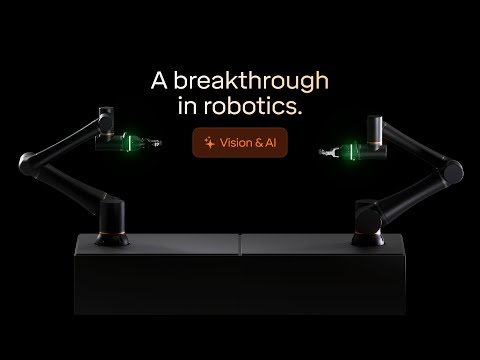
Standard Bots Showcase
Standard Bots — Frequently Asked Questions
What is Standard Bots?
Standard Bots is a US industrial robotics company offering Spark, Core, and Thor six-axis robot arms, StandardOS software, developer tools, support, and an emerging AI platform. Bolt is a configurable bimanual system marked coming soon.
Is RO1 now called Core?
The current product page at the RO1 address calls the 18 kg robot Core, while older manuals and materials continue to use RO1. Buyers should use the serial number and model documentation when matching support information.
How much does Standard Bots Core cost?
Core currently starts at a published list price of $37,000. Optional vision, tools, bases, safety equipment, integration, onsite setup, freight, and the rest of the workcell can increase the total.
How much does Standard Bots Thor cost?
Thor currently starts at a published list price of $49,500. It has an advertised 30 kg payload and 2 m reach, but a complete application requires a separate scope and quotation.
How much does Standard Bots Spark cost?
Spark is listed at $29,500. The education page shows a starting $35,700 package with the arm, an electric gripper, conveyor, and shipping allowance. Confirm availability, region, and exact bundle contents.
Is Standard Bots Bolt available?
Bolt is currently labelled coming soon and the site accepts reservations and configurations. Public pricing, final specifications, delivery dates, and generally available capabilities have not been fully published.
What is StandardOS?
StandardOS is the software layer for programming routines, managing equipment, viewing robots and fleets, monitoring health, using vision, configuring settings, and connecting external controls.
Does Standard Bots support APIs and ROS?
Yes. Standard Bots documents REST APIs, Python and TypeScript SDKs, remote monitoring, external control, and ROS compatibility. Some additional languages and developer functions remain labelled coming soon.
Does Core include vision?
The current Core page describes an optional available wrist camera and optional pre-integrated vision. Buyers should confirm the exact camera, software functions, calibration, support, and package price.
What is Standard Bots Flux AI?
Flux is a private-beta platform for training robot skills through demonstrations and cloud models. Eligibility, supported tasks, hardware, data requirements, pricing, and production support must be confirmed with Standard Bots.
Can Standard Bots robots work without fencing?
Some properly designed applications may operate collaboratively, but the manuals require a comprehensive risk assessment. The tool, payload, speed, force, workpiece, hazards, and wider cell may require scanners, interlocks, or guarding.
Does Standard Bots provide installation and support?
Standard Bots advertises virtual training, remote diagnostics, continuous software updates, onsite setup at additional cost, warranty replacement terms, and selected leasing or pilot routes. Confirm scope and regional coverage in writing.
Sources & References
- Standard Bots official company and product overview ↗
- Standard Bots Spark product page ↗
- Standard Bots Core product page and pricing ↗
- Standard Bots Thor product page and pricing ↗
- Standard Bots Bolt preview and reservation page ↗
- StandardOS software overview ↗
- Standard Bots developer platform ↗
- Standard Bots Flux AI private-beta overview ↗
- Standard Bots education programme and bundle pricing ↗
- Standard Bots programming manual ↗
- RO1 intended use and integration limits ↗
- RO1 safety features and integration guidance ↗
- Core mechanical manual and risk-assessment guidance ↗
- Thor manual and risk-assessment guidance ↗
- Standard Bots external control interfaces ↗
Try Standard Bots
Visit the official website to get started with Standard Bots today.
Visit Standard Bots →